01
Biochar
Carbon-rich material added to agricultural soil as an enhancer and long-term carbon sequestration medium.
 Explore the cycle ↗
We use the natural power of bamboo and the precision of pyrolysis to move carbon from the atmosphere back into the ground.
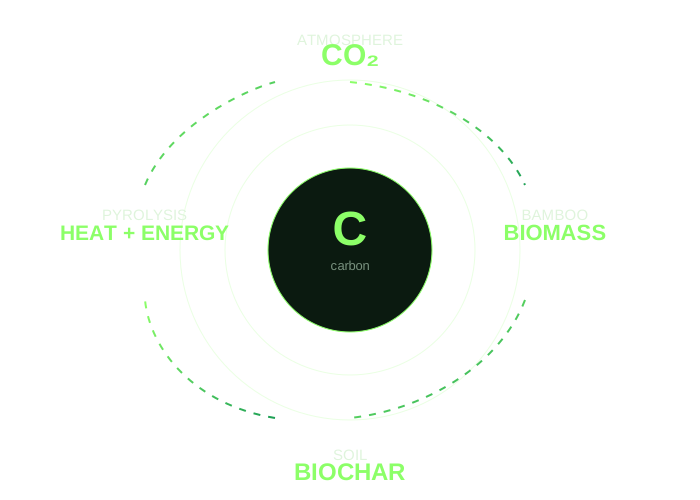
DeCarb Swiss connects a biological carbon capture pathway with a controlled thermal conversion process.
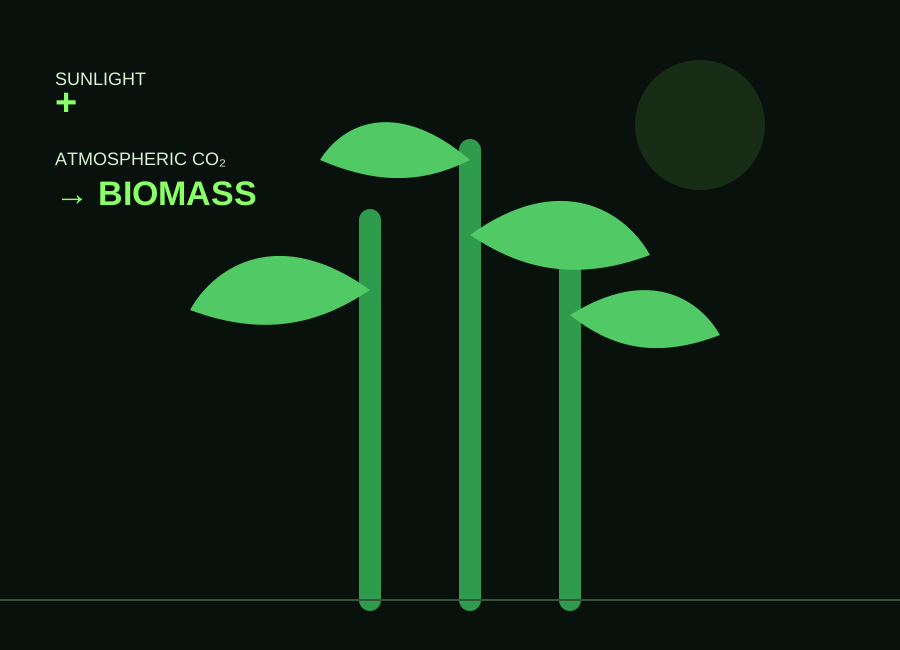
Bamboo takes in CO₂ as it grows. Its biomass can then be converted through pyrolysis into biochar — creating a pathway for carbon to be stored in agricultural soil.
Scroll through the cycle. Each stage transforms where the carbon lives.
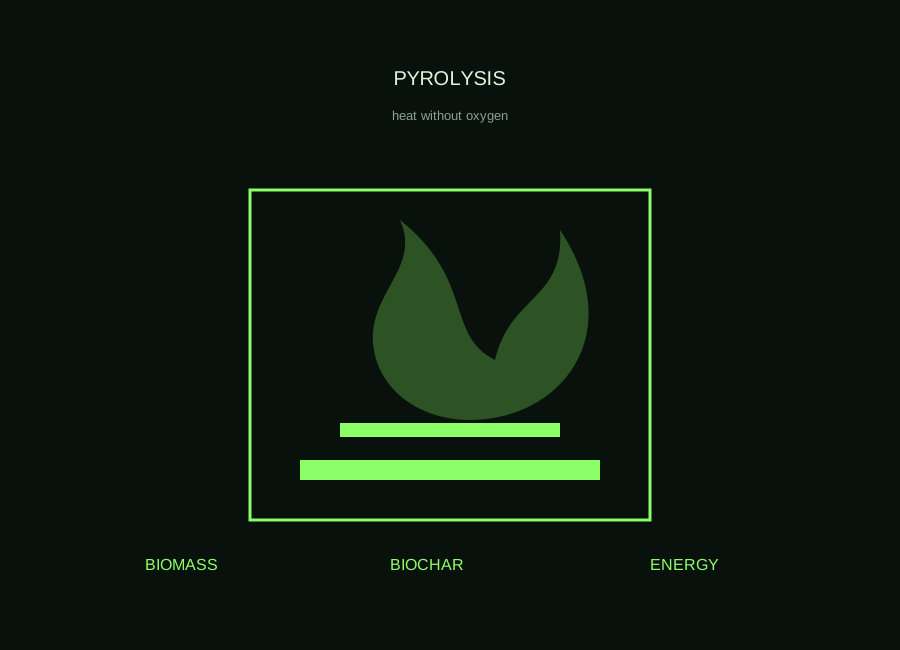
Pyrolysis can create multiple useful outputs. Biochar is the carbon-rich material directed toward soil, alongside energy co-products.
Carbon-rich material added to agricultural soil as an enhancer and long-term carbon sequestration medium.
Energy-rich co-products with potential applications across energy and transport.
Residual process heat can be recovered and used where appropriate.
The concept pairs a biological carbon sink with thermal conversion. The result is a circular pathway: atmospheric carbon becomes plant biomass, biomass becomes biochar, and biochar returns carbon to soil.
A nature-led pathway for taking CO₂ from the atmosphere and putting carbon back into the ground.
Back to top ↑